Maritime safety and regulations
Within maritime safety and regulations, SIMAC Training offers a range of courses, as listed below.
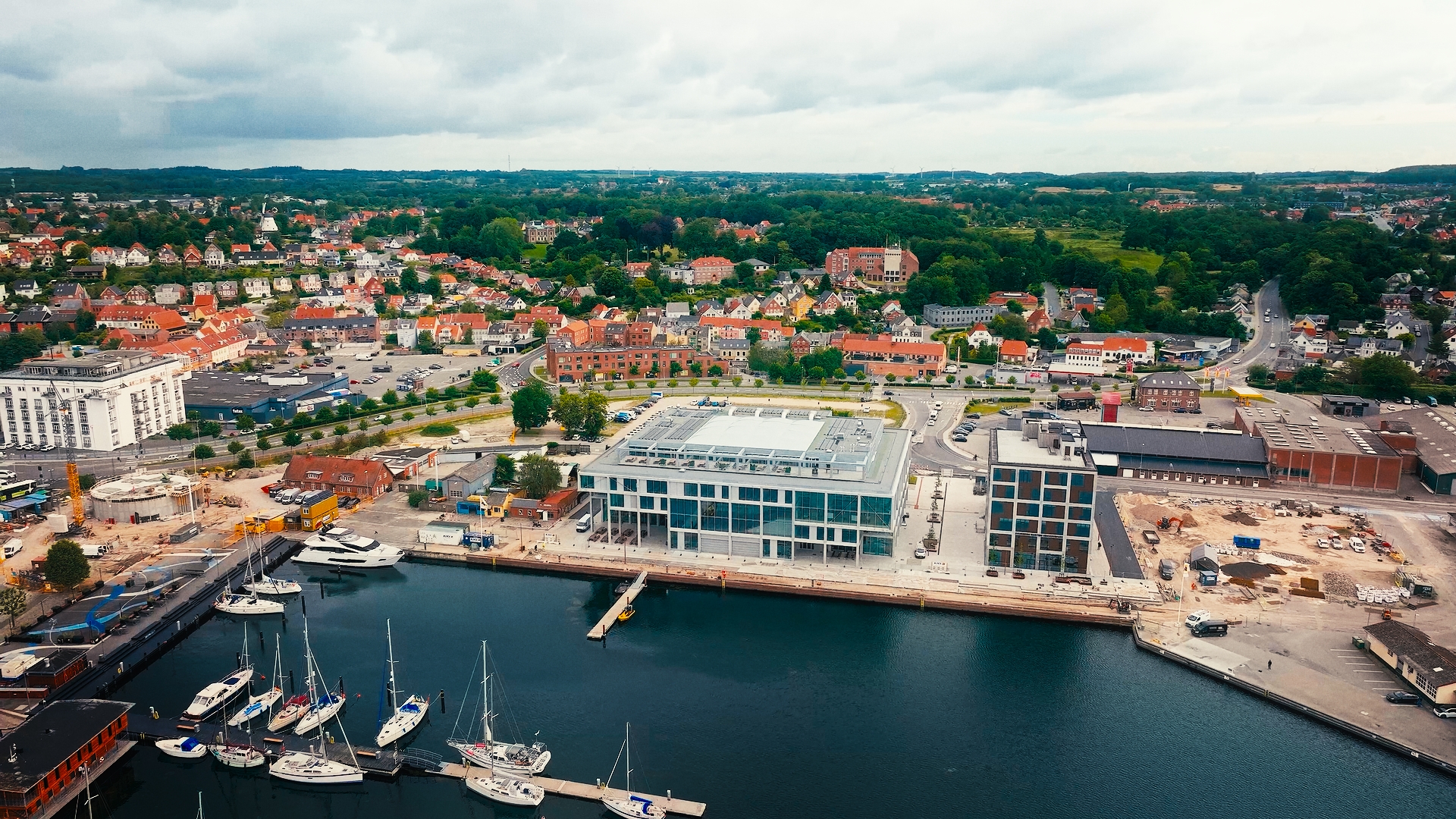
Within Maritime Safety and Regulations, SIMAC Training offers the standard courses listed below.
You can register for open courses here.
f you cannot find your preferred course dates and/or wish to discuss the possibility of a tailored course to meet your needs within maritime safety and regulations, you are welcome to contact us. SIMAC Training directly.
Maritime Safety and Legislation
Crisis Management and Human Behaviour (Section 5)
Purpose and Course Content:
The Crisis Management and Human Behaviour (Section 5) course provides participants with the knowledge and skills required to manage crisis and emergency situations at sea. Upon completion of the course, participants will have acquired the qualifications necessary to organize emergency procedures on board, optimize the use of resources, control responses to emergencies, lead passengers and other personnel during crisis situations, and establish and maintain effective communication during emergencies.
The course is based on a dialogue-oriented teaching approach, combining theoretical instruction with practical exercises, including communication exercises conducted over radio.
The course covers the following topics:
Organization of onboard emergency procedures
Optimization of resource utilization
Control of responses to emergency situations
Leadership of passengers and other personnel during emergencies
Establishment and maintenance of effective communication
Crisis management, psychological shock reactions, and psychological first aid
Leadership exercises under stress
Entry Requirements/Target Group:
The course is intended for masters, chief officers, chief engineers, first engineers, and other personnel who, according to the ship’s emergency muster list, are responsible for passenger safety during emergencies.
Duration:
2 days
Notes:
The course is normally conducted in Danish.
The course fulfills the training requirements under Section 5 of Executive Order No. 391 of 22 April 2014 issued by the Danish Maritime Authority regarding special training and qualification requirements for personnel serving on passenger ships.
Passenger Safety and Stability (Section 6)
Purpose and Course Content:
The Passenger Safety, Cargo Safety and Hull Integrity (Section 6) course provides participants with knowledge of stability as it relates to passenger safety, cargo safety, and hull integrity. The course equips participants with the skills required to fulfil their duties and responsibilities on board regarding stability calculations, trim, force effects, and cargo securing, including the handling of dangerous goods.
The course is based on a dialogue-oriented teaching approach, combining theoretical instruction with practical exercises.
The course covers the following topics:
Calculation of stability, trim, and force effects
Effects of changes in ballast and fuel
Monitoring of stability, damage stability, damage control, and survivability plans
Deck loading
Review of current trim and stability manuals
Cargo securing, including dangerous goods
Entry Requirements/Target Group:
The course is intended for senior officers and others who have direct responsibility for the embarkation and disembarkation of passengers on passenger ships, as well as for the loading, unloading, or securing of cargo, or for the closure of hull openings on board Ro-Ro passenger vessels.
Duration:
1 day (+ 1 day of preparation)
Notes:
The course fulfills the training requirements under Section 6 of Executive Order No. 391 of 22 April 2014 issued by the Danish Maritime Authority regarding special training and qualification requirements for personnel serving on passenger ships.
Upon completion of the course, Danish shipping companies operating passenger vessels may issue a certificate of qualification following ship-specific familiarization training.
The certificate is a prerequisite for serving on passenger ships and Ro-Ro passenger vessels.
Where possible, participants may complete assignments using their own vessel’s trim and stability manual. This requires the manual to be submitted electronically to the training provider no later than one week before the start of the course.
The course is normally conducted in Danish.
Planning and Conducting Lifeboat and Fire Drills (Section 7)
Purpose and Course Content:
The Planning and Conducting Lifeboat and Fire Drills (Section 7) course teaches participants how to plan and conduct maritime lifeboat and fire drills related to firefighting, evacuation procedures, and lifesaving appliances.
The course provides participants with a broad understanding of national and international requirements for shipboard organization during emergencies and disasters, as well as guidance on appropriate conduct in everyday life at sea.
Upon completion of the course, participants will have acquired the competencies and understanding required to plan and conduct lifeboat and fire drills. Drawing on participants’ own experiences, as well as lessons learned from previous maritime accidents, they will be able to identify key issues and problem areas and gain the knowledge necessary to establish an effective shipboard organization for dealing with crisis and emergency situations.
The course consists of a series of theoretical presentations supplemented by practical group exercises. The exercises are designed around participants’ daily work environments and involve a high degree of hands-on training and active participation, including role-playing based on realistic emergency scenarios.
The course covers, among other topics:
Regulations, definitions, and concepts
Lifesaving preparation and planning
Management of passengers at muster and survival stations
Communication during crisis and emergency situations
Entry Requirements/Target Group:
The course is intended for officers, senior catering personnel, and other personnel who, according to the ship’s muster lists, have responsibilities related to the safety of the vessel and its passengers.
Duration:
1 day
Notes:
The course fulfills the training requirements under Section 7 of Executive Order No. 391 of 22 April 2014 issued by the Danish Maritime Authority regarding special training and qualification requirements for personnel serving on passenger ships.
§16 Occupational Health and Safety Course for Safety Group Members on Merchant Ships
Purpose and Course Content:
The Section 16 – Occupational Health and Safety Course for Safety Group Members on Merchant Ships ensures that members of the safety group have completed the occupational health and safety training required under the Danish Maritime Authority’s regulations on safety work aboard merchant vessels.
Upon completion of the course, participants will understand their practical role and responsibilities as members of the safety group. They will also gain the knowledge necessary to work with others to promote and maintain a safe and healthy working environment on board merchant ships.
Entry Requirements/Target Group:
The course is intended for members of the safety group serving on merchant vessels operating under the Danish flag.
Duration:
1 day online, plus preparation prior to the course.
Notes:
If international participants attend the course, the language of instruction will be English; otherwise, the course will be conducted in Danish. English-language training materials are used throughout the course.
The course fulfills the training requirements of the Danish Maritime Authority Executive Order No. 846 of 25 June 2018:
Executive Order on Safety Work on Merchant Ships (Occupational Health and Safety on Ships).
Danish Maritime Legislation for Foreign Senior Officers
Purpose and Course Content:
The Danish Maritime Legislation for Foreign Senior Officers course ensures that foreign senior officers and masters acquire the necessary knowledge of Danish maritime legislation required to serve on Danish-flagged vessels. Upon completion of the course, participants will have the legal knowledge necessary to work as senior officers and masters on board Danish ships.
The course is delivered as an internet-based distance learning programme. Alternatively, larger groups may be trained at another location by prior arrangement.
The course is conducted in accordance with the training programmes issued by the Danish Maritime Authority for Danish Maritime Legislation for Foreign Senior Officers and Danish Maritime Legislation for Foreign Masters and includes, among other topics:
Act on Safety at Sea
Instruction of Seafarers When Signing On Ships
The Seamen’s Act
The Merchant Shipping Act
Manning of Ships Act
The course consists of self-study combined with assignments that must be completed and submitted before the final interview.
The course includes Section 16 – Occupational Health and Safety, which is conducted on fixed dates as a one-day instructor-led course.
The course complies with Executive Order No. 783 of 12 June 2018 on the recognition of foreign certificates for service on merchant ships and training in Danish maritime legislation.
Entry Requirements/Target Group:
The course is intended for holders of foreign certificates of competency who are to serve on Danish-flagged vessels as Master, Chief Officer, Chief Engineer, or First Engineer.
To participate in the course, applicants must provide confirmation from a shipping company of subsequent employment.
Duration:
Self-study with assignments and a final interview, including the Section 16 course.
Notes:
The course fulfills the requirements of Executive Order No. 783 of 12 June 2018 concerning the recognition of foreign certificates for service on merchant ships and training in Danish maritime legislation (Certificates of Recognition).
Dangerous Goods and the Baltic Sea Agreement
Purpose and Course Content:
The Dangerous Goods and the Baltic Sea Agreement course provides participants with knowledge of the transport of dangerous goods by sea.
Module 1: This module provides participants with the knowledge required under the IMDG Code to handle dangerous goods safely and responsibly during normal operations and to respond appropriately to incidents involving dangerous goods on board.
Module 2: This module provides participants with the skills and competencies required under the IMDG Code to handle dangerous goods safely and responsibly during normal operations and to respond appropriately to incidents involving dangerous goods on board.
Module 3: This module provides participants with the knowledge, skills, and competencies required under the Memorandum of Understanding concerning the transport of dangerous goods on Ro-Ro ships in the Baltic Sea area (the Baltic Sea Agreement) to handle dangerous goods safely and responsibly during normal operations. Participants obtain certification in accordance with Section 9.4 of the Baltic Sea Agreement.
Entry Requirements/Target Group:
The course is intended for able seafarers and officers seeking training or refresher training in the handling of dangerous goods in accordance with the IMDG Code.
It is also intended for able seafarers and officers seeking certification under the Baltic Sea Agreement in order to obtain competencies in the handling of dangerous goods on board Ro-Ro vessels in accordance with the IMDG, ADR, and RID Codes.
To obtain certification under Section 9.4 of the Baltic Sea Agreement following Module 3, participants must already possess knowledge of and practical skills in the use of the IMDG Code, which can be acquired through Modules 1 and 2.
Duration:
1 day.
Ballast Water Management
Purpose and Course Content:
This course has been developed to provide industry professionals with an understanding of the requirements and challenges related to Ballast Water Management.
The aim of the course is to enable participants to become familiar with ballast water management methods and to understand the requirements of the International Ballast Water Management Convention concerning the control and management of ships’ ballast water and sediments. Participants will also gain knowledge of how ships can minimize environmental damage caused by the transfer of ballast water.
No prior qualifications are required for participation in this course.
Entry Requirements/Target Group:
This course is valuable for both shore-based personnel and ship officers who work directly with Ballast Water Management systems.
Duration:
1 day
Notes:
For course dates, please contact SIMAC Training directly.
IMSBC Course
Ja, hvis vi følger samme format som de andre kurser, bør den med under Notes:
Purpose and Course Content:
This online course covers the International Maritime Solid Bulk Cargoes (IMSBC) Code, including its application, requirements relating to ships and cargoes, and the practical use of the Code in connection with the carriage of bulk cargoes by sea. The requirements of the Code are mandatory under the provisions of the SOLAS Convention.
The course is intended for shipping companies, ship operators, freight forwarders, and ship officers involved in the loading and unloading of bulk cargoes.
During the course, participants will also learn about hazards to ships, including structural damage caused by incorrect cargo distribution, loss or reduction of stability during voyages, and chemically reactive cargoes.
Entry Requirements/Target Group:
There are no formal prerequisites for participation in this course. However, participants should have access to an IMSBC Code during the course.
Duration:
1 day
Notes:
For course dates, please contact SIMAC Training directly at training@simac.dk.