Simulator courses
Below you can find the simulator courses offered by SIMAC Training.
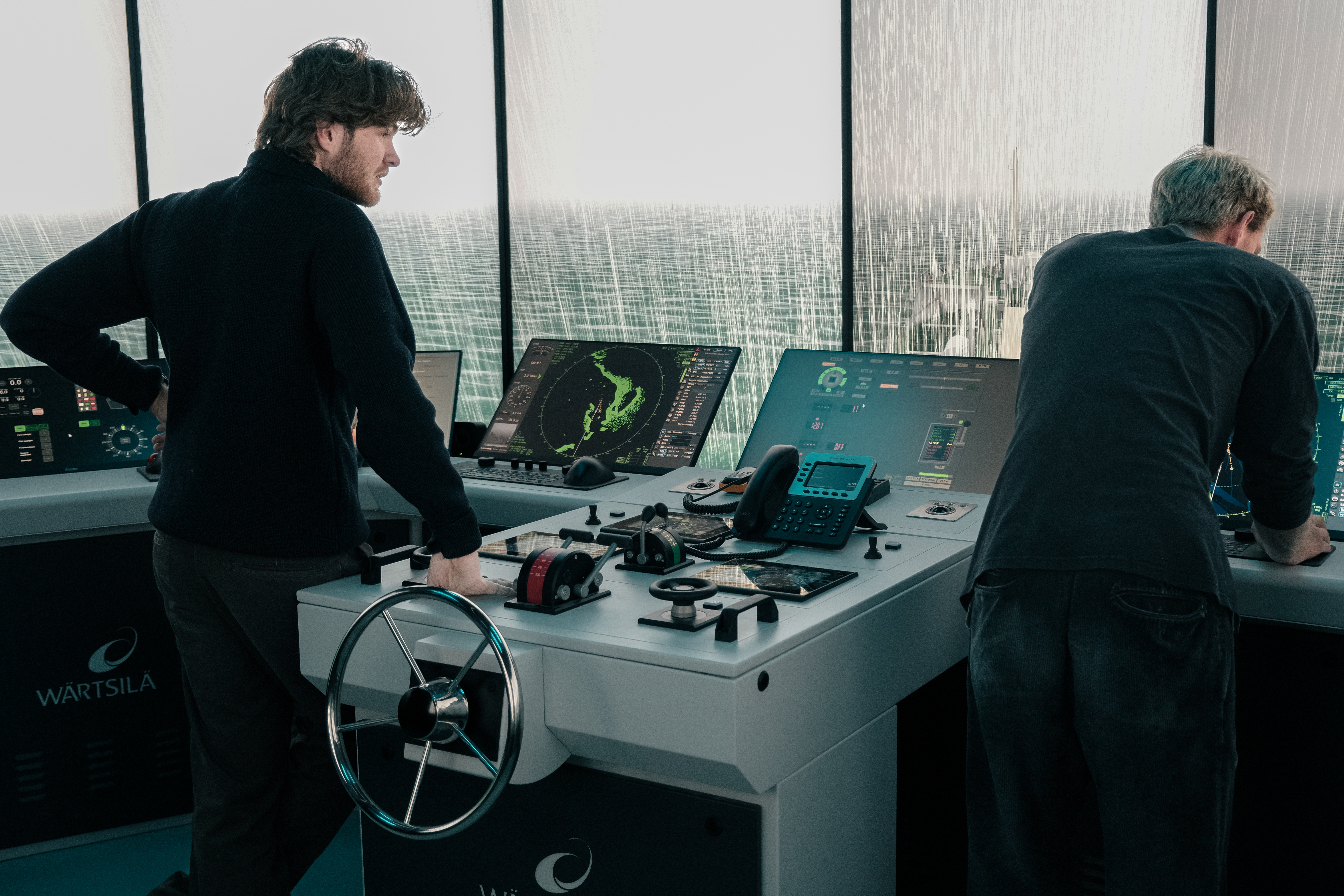
Simulator Courses
SIMAC Training offers the standard simulator courses listed below.
You can register for open courses here.
If you cannot find suitable course dates, or if you would like to discuss the possibility of a customized training programme tailored to your specific requirements within the field of simulation training, please feel free to contact SIMAC Training directly.
Simulator Courses
ARPA Refresher (Automatic Radar Plotting Aid)
Purpose and Course Content:
The course refreshes participants’ knowledge and skills in the use of ARPA (Automatic Radar Plotting Aid) for navigation and collision avoidance in full compliance with the International Regulations for Preventing Collisions at Sea (COLREGs) and watchkeeping regulations, as required for service as an officer in charge of a navigational watch.
The course covers the following topics:
ARPA theory
Basic ARPA functions
Operational use of ARPA
Errors and limitations in ARPA systems
Entry Requirements/Target Group:
This course is intended for navigators who have previously completed an ARPA course and who, in connection with the renewal of a certificate of competency, need to renew their ARPA certification.
Duration:
2 days
Notes:
The training meets the requirements for the use of ARPA under the STCW Convention, as specified in Sections A-II/1 and A-II/2 of the STCW Code.
For course dates, please contact SIMAC Training directly at training@simac.dk.
ECDIS Generic (TRANSAS)
Purpose and Course Content:
The ECDIS Generic course provides participants with a fundamental understanding of the advantages and limitations of ECDIS, as well as knowledge of the management and maintenance of such systems.
Upon completion of the course, participants will be able to use ECDIS for the planning and execution of safe navigation, voyage planning and monitoring, display of navigational data, chart updating, and related tasks.
The course combines theoretical learning with practical operation of ECDIS equipment and systems. Training is therefore delivered through a combination of theoretical instruction and practical exercises.
The teaching approach is dialogue-based, with a strong emphasis on participants sharing knowledge and experience.
The course covers the following topics:
ECDIS theory
Basic ECDIS functions
Operational use of ECDIS
ECDIS errors and malfunctions
Entry Requirements/Target Group:
This course is intended for navigators, dual officers, and other personnel with responsibilities related to navigational operations.
The course complies with IMO Model Course 1.27, including the Manila Amendments to the STCW Convention.
NOTE! If you have other experience and/or a different Certificate of Competency than stated above, please contact us directly for an individual competence assessment.
Duration:
2 days
Notes:
This course follows IMO Model Course 1.27 and complies with the Manila Amendments to the STCW Convention.
English-language training materials are used throughout the course.
If international participants attend the course, the language of instruction will be English.
ECDIS Type Specific Transas NS4000
Purpose and Course Content:
The course provides participants with an in-depth understanding of the structure and operation of the NS4000 ECDIS system.
Upon completion of the course, participants will be able to use ECDIS for the planning and execution of safe navigation, voyage planning and monitoring, display of navigational data, chart updating, and related tasks.
The course combines theoretical learning with practical operation of ECDIS equipment and systems. Training is therefore delivered through a combination of theoretical instruction and practical exercises.
The teaching approach is dialogue-based, with a strong emphasis on participants sharing knowledge and experience.
The course covers the following topics:
Advanced functions
Display configuration
Advanced voyage planning exercises
Sensor setup and monitoring
Entry Requirements/Target Group:
This course is intended for navigators, dual officers, and other personnel with responsibilities related to navigational operations.
The course meets flag state and vetting requirements for documentation of type-specific ECDIS training.
Participants are recommended to have completed an ECDIS Generic course or otherwise possess equivalent qualifications.
Duration:
2 days
Notes:
English-language training materials are used throughout the course.
If international participants attend the course, the language of instruction will be English.
For course dates, please contact SIMAC Training directly at training@simac.dk.
Bridge Team Management (BTM)
Purpose and Course Content:
Upon completion of the course, participants will have enhanced their knowledge, understanding, and awareness of the importance of the human factor in ship operations.
Participants will also have acquired a foundation for applying and developing Bridge Team Management (BTM) skills, both during routine operations and under critical circumstances. In addition, they will gain practical tools to improve teamwork, communication, leadership, decision-making, and resource management, as well as an understanding of how these BTM skills contribute to redundancy and enhanced safety.
The course is conducted through a combination of theoretical presentations and supervised training in a full-mission bridge simulator. The teaching approach is dialogue-based, with a strong emphasis on participants sharing knowledge and experience. Simulator exercises and scenarios are adapted to the participants’ professional backgrounds and experience.
The course covers the following topics:
Definition of Bridge Team Management (BTM)
Resource management
Near misses and accidents
Communication methods, perception, and questioning techniques
Team balance, assertiveness, and flexibility
Stress effects and stress indicators
Situational assessment and decision-making
Planning principles and practical planning
Effective communication
Leadership functions
Entry Requirements/Target Group:
The course is intended for navigators and dual officers serving on all vessel types.
Duration:
3 days (Day 1 is conducted online via Teams, while Days 2 and 3 require physical attendance).
Notes:
The course complies with the standards set out in Sections A-II/1 and A-II/2 of the STCW Convention, including the Manila Amendments.
Participants must have access to a computer with a microphone and camera, as well as a stable internet connection.
Bridge Team Management (BTM) refresher
Purpose and Course Content:
The purpose of the Bridge Team Management (BTM) Refresher course is to review the key principles of resource management and provide a training environment that enhances competencies related to operational safety and efficiency on board ships.
Upon completion of the course, participants will have refreshed their knowledge, understanding, and awareness of the importance of the human factor in ship operations.
Participants will also have reinforced their ability to apply and develop bridge management skills during both routine operations and critical situations.
In addition, they will gain practical tools to improve teamwork, communication, leadership, decision-making, and resource management, as well as an understanding of how these BTM skills contribute to redundancy and enhanced safety.
The course is conducted through a combination of theoretical presentations and supervised training in a full-mission bridge simulator. The simulators at SIMAC are capable of replicating the complete operational environment of a vessel. Exercises, scenarios, and simulator configurations are tailored to the participants’ professional backgrounds and experience.
The course includes a review of the following topics:
Definition of Bridge Team Management (BTM)
Resource management
Near misses and accidents
Communication methods, perception, and questioning techniques
Team balance, assertiveness, and flexibility
Stress effects and stress indicators
Situational assessment and decision-making
Planning principles and practical planning
Effective communication
Leadership functions
Entry Requirements/Target Group:
The course is intended for dual officers and bridge officers serving on all vessel types.
Duration:
1 day (Online)
Notes:
The course complies with the standards set out in Sections A-II/1 and A-II/2 of the STCW Convention, including the Manila Amendments.
Participants must have access to a computer with a microphone and camera, as well as a stable internet connection.
Engine Room Team Management (ERTM/ERS, IMO2.07) / Refresher
Purpose and Course Content:
The purpose of the Engine Room Team Management (ERTM) course is to introduce the key principles of resource management and provide a training environment that develops competencies for improving operational safety and efficiency on board ships.
Upon completion of the course, participants will have enhanced their knowledge, understanding, and awareness of the importance of the human factor in ship operations.
Participants will also have strengthened their ability to apply and develop leadership skills during both routine operations and critical situations. In addition, they will gain practical tools to improve teamwork, communication, leadership, decision-making, and resource management, as well as an understanding of how these ERTM skills contribute to redundancy and enhanced safety.
The course is conducted through a combination of theoretical presentations and supervised training in a full-mission engine room simulator, where participants engage in a variety of scenarios with varying levels of complexity. Depending on participants’ experience, the exercises may be conducted using either a twin medium-speed engine room simulator or a slow-speed MAN B&W engine room simulator.
Exercises, scenarios, and simulator configurations are tailored to the participants’ professional experience.
The course covers the following topics:
Engine Room Team Management (ERTM)
Resource management
Near misses and accidents
Communication methods, perception, and questioning techniques
Team balance, assertiveness, and flexibility
Stress effects and stress indicators
Situational assessment and decision-making
Planning principles and practical planning
Effective communication
Leadership functions
Entry Requirements/Target Group:
The course is intended for marine engineers and dual officers employed in the shipping or offshore industries.
Participants must have prior knowledge of engine room operations.
Duration:
3 days (Day 1 is conducted online via Teams, while Days 2 and 3 require physical attendance).
Note: The refresher course consists of 1 online day and corresponds to Day 1 of the full course.
Notes:
Participants should wear appropriate clothing and footwear, as training takes place in a warm and noisy simulator environment with steep stairways.
The course complies with the standards set out in Sections A-III/1 and A-III/2 of the STCW Convention, including the Manila Amendments.
Participants must have access to a computer with a microphone and camera, as well as a stable internet connection.
For course dates, please contact SIMAC Training directly at training@simac.dk.
Shiphandling basic
Purpose and Course Content:
The purpose of this course is to train navigators in basic and fundamental ship handling techniques through practical manoeuvring exercises involving fixed-pitch propeller (FPP), controllable-pitch propeller (CPP), and twin-screw vessels. The course examines both controllable and uncontrollable forces affecting vessel manoeuvrability in a variety of operational scenarios and environments.
The course may include the following topics (which may be tailored to customer-specific requirements):
Theoretical instruction covering:
Manoeuvring capabilities and strategies
Stopping distances
Williamson Turn
Constant rate of turn techniques
Use of thrusters
Rudders, types, and effects
Propellers, types and effects, propeller wash effects, and twin-screw vessels
Harbour manoeuvring using propellers and multiple rudders
Bank effect
Overtaking situations
Encounters with other vessels, including ship-to-ship interaction effects
Navigation under varying weather conditions, including wind, current, and wave effects
General anchoring procedures and two-anchor mooring operations
Instrument navigation in restricted visibility and during night operations
Use of tugboats and escort towing
Squat effect
Under-keel clearance
Pivot point
Hydrodynamics
Practical exercises supporting and illustrating the theoretical topics, including:
Harbour manoeuvring with relevant vessel types and equipment
Harbour manoeuvring using twin-screw vessels and rudders
Harbour manoeuvring with tug assistance
Navigation and harbour approaches under varying weather conditions, including wind, current, and waves
Navigation under the influence of hydrodynamic effects such as bank effect
Navigation and harbour approaches using escort towing
Anchoring operations
Squat effect and passing other vessels
Ship handling using both fixed-pitch and controllable-pitch propellers
Entry Requirements/Target Group:
The course is intended for navigators.
Duration:
2 days
Notes:
Reference: STCW Convention, including the Manila Amendments, Section A-II/1.
Shiphandling refresher
Purpose and Course Content:
The purpose of this course is to refresh navigators’ knowledge and skills in basic and fundamental ship handling techniques through practical manoeuvring exercises involving fixed-pitch propeller (FPP), controllable-pitch propeller (CPP), and twin-screw vessels.
The course may include the following topics (which may be tailored to customer-specific requirements):
Theoretical instruction covering:
Manoeuvring capabilities and strategies
Stopping distances
Williamson Turn
Constant rate of turn techniques
Use of thrusters
Rudders, types, and effects
Propellers, types and effects, propeller wash effects, and twin-screw vessels
Harbour manoeuvring using propellers and multiple rudders
Bank effect
Overtaking situations
Encounters with other vessels, including ship-to-ship interaction effects
Navigation under varying weather conditions, including wind, current, and wave effects
General anchoring procedures and two-anchor mooring operations
Instrument navigation in restricted visibility and during night operations
Use of tugboats and escort towing
Squat effect
Under-keel clearance
Pivot point
Hydrodynamics
Practical exercises supporting and illustrating the theoretical topics, including:
Harbour manoeuvring with relevant vessel types and equipment
Harbour manoeuvring using twin-screw vessels and rudders
Harbour manoeuvring with tug assistance
Navigation and harbour approaches under varying weather conditions, including wind, current, and waves
Navigation under the influence of hydrodynamic effects such as bank effect
Navigation and harbour approaches using escort towing
Anchoring operations
Squat effect and passing other vessels
Ship handling using both fixed-pitch and controllable-pitch propellers
Entry Requirements/Target Group:
The course is intended for navigators.
Duration:
1 day
Notes:
Reference: STCW Convention, including the Manila Amendments, Section A-II/1.
Generic Marine and Helicopter Coordinator
Purpose and Course Content:
The Generic Marine and Helicopter Coordinator course provides participants with an expanded theoretical understanding of the many tasks associated with the establishment and operation of offshore installations, wind farms, and similar facilities. The course is designed to develop the skills required to coordinate and communicate activities related to worksite monitoring, unit movements, personnel transportation, and emergency preparedness in a 24/7 operational environment.
Upon completion of the course, participants will have gained a comprehensive understanding of the various aspects of the coordination role.
Practical exercises must be completed satisfactorily, and participants are expected to demonstrate active participation and professional development throughout the course.
Particular emphasis is placed on developing an understanding of personnel safety in relation to operational activities.
The course combines theoretical instruction with practical exercises, allowing participants to apply newly acquired knowledge in realistic scenarios. Through these exercises, participants gain insight into the many elements involved in marine and helicopter coordination.
During the course, participants work with coordinating activities such as crew changes on offshore installations and wind turbines using supply vessels. Helicopter operations involving transportation of technicians from shore to turbine and between turbines are also included. Emergency response scenarios may occur as part of the training.
The five-day course covers the following topics:
Understanding vessel manoeuvring capabilities under various weather conditions
Vessel Traffic Service (VTS) operations
Helicopter procedures
Daily coordination of crew and technician transfers by sea and air
Emergency preparedness and response
Entry Requirements/Target Group:
The course is intended for individuals with limited or some experience in maritime transport operations, as well as individuals with equivalent experience in the aviation sector.
It is also relevant for personnel who have previously worked with Vessel Traffic Service (VTS) operations and for those seeking employment within this specialized industry.
To participate in the course, applicants must hold a valid ROC radio certificate.
Duration:
5 days
Notes:
The course does not conclude with a formal examination. Participants are continuously assessed throughout the course.
The curriculum includes the guidelines set out in IALA Recommendation V-103/1.
For course dates, please contact SIMAC Training directly at training@simac.dk.
Operation and Watchkeeping – Engine Room Systems
Purpose and Course Content:
The purpose of the Operation and Watchkeeping – Engine Room Systems course is to qualify participants to perform the duties of an Officer in Charge of an Engineering Watch, as specified in the STCW Code.
Upon completion of the course, participants will have acquired the knowledge and competencies required to perform the duties of an engineering watch officer, including an understanding of various voyage scenarios, effective communication, and teamwork.
The course is practice-oriented. Working in small groups, participants complete a range of operational scenarios in the simulators, which are subsequently reviewed and analysed during debriefing sessions in relation to the exercise outcomes and accepted industry practice.
Training is conducted primarily in SIMAC’s full-mission engine room simulator. SIMAC also provides a range of graphical simulators that may be used to prepare participants for upcoming exercises in the full-mission engine room simulator.
The course covers the following topics:
Duties of the Officer in Charge of an Engineering Watch
Operation of main and auxiliary engines under normal and abnormal conditions
Troubleshooting and fault diagnosis
Use of the Oil Record Book and the Chief Engineer’s logbook
Watch handover procedures
Entry Requirements/Target Group:
The course is intended for newly qualified marine engineers and for marine engineers who have been away from the maritime industry for a period of time and require an update on engine room operations and watchkeeping.
Duration:
2.5 days
Notes:
The course fulfills the requirements specified in the Watchkeeping Regulations and in the STCW Code, Section A-III/1 – Standards of Competence, with regard to the safe conduct of an engineering watch and the associated duties related to the operation and supervision of main and auxiliary machinery.
For course dates, please contact SIMAC Training directly at training@simac.dk.
Advanced Oil and Chemical Tanker Training (Online)
Purpose:
This online course takes in to account the following elements of the STCW Convention Code:
Chapter V regulation V/1-1, Chapter V Section A-V/1-1.2 and Table A-V/1-1-2 (Standard of Competences in advanced training for Oil tanker Cargo Operations)
Chapter V regulation V/1-1, Chapter V Section A-V/1-1.3 and Table A-V/1-1-3 (Standard of Competences in advanced training for Chemical tanker Cargo Operations)
After completing the course we will issue certificates (individual) for both Advanced Oil Tanker Training and Advanced Chemical Tanker Training. SIMAC Training is a training academy approved by the Danish Maritime Authorities.
Technical requirements:
Laptop or PC, with a min. screen of 12” for training sessions, reading and solving assignments.
SIMAC Training always recommends 2 screen if possible, one screen can be a tablet.
Keyboard and Mouse accessible during the duration of the course.
Web-camera, speaker and microphone has to be available during the course at all times.
Broadband connection, or high speed mobile internet connection, has to be available during the course at all times.
Duration:
5 days + 5 days preparation
Chemical Tanker Cargo and Ballast Simulator (IMO Model Course 1.37)
Duration: 2 days (including approximately 1 day of self-preparation)
Delivery Mode: Online (Wärtsilä’s cloud-based Liquid Cargo Handling System - LCHS)
Course Overview
This course provides essential training in chemical tanker cargo and ballast handling, following the IMO Model Course 1.37 framework. It ensures participants develop the necessary knowledge and skills to manage chemical cargo and ballast operations safely, efficiently, and in compliance with international regulations. The training also supports compliance with SIRE 2.0 requirements, ensuring industry best practices are met.
Course Content
Participants will cover:
Chemical cargo handling principles and procedures – Safe loading, discharging, and transfer of hazardous liquid cargoes.
Cargo planning and segregation – Proper planning to prevent contamination and ensure cargo integrity.
Ballast system management – Maintaining vessel stability and operational safety.
Cargo and ballast monitoring systems – Understanding key instrumentation and controls.
Chemical tanker safety measures – Handling toxic, flammable, and reactive cargoes.
Emergency response and pollution prevention – Implementing contingency plans and minimizing environmental impact.
Regulatory compliance – Meeting IMO, MARPOL, IBC Code, and SIRE 2.0 training standards.
Learning Approach
The course is delivered online using Wärtsilä’s Liquid Cargo Handling System (LCHS), providing a realistic simulation of chemical tanker cargo and ballast operations. Training includes self-paced study, interactive modules, and instructor-led virtual sessions to reinforce practical knowledge.
Who Should Attend?
This course is designed for deck officers, engineers, and shore-based personnel involved in chemical tanker operations who need to meet IMO and industry training requirements.
Certification
Upon successful completion, participants will receive a Certificate of Completion, confirming their compliance with IMO Model Course 1.37 and industry best practices.
Course registration:
Oil Tanker Cargo and Ballast Handling (IMO Model Course 2.06)
Duration: 2 days (including approximately 1 day of self-preparation)
Delivery Mode: Online (Wärtsilä’s cloud-based Liquid Cargo Handling System - LCHS)
Course Overview
This course provides essential training in oil tanker cargo and ballast handling, following the IMO Model Course 2.06 framework. It ensures participants develop the necessary knowledge and skills to manage cargo and ballast operations safely, efficiently, and in compliance with international regulations, including SIRE 2.0 section 3.3.3.
Course Content
Participants will cover:
Cargo handling principles and procedures – Loading, discharging, and transfer operations.
Cargo planning and execution – Safe and efficient planning of tanker operations.
Ballast system management – Maintaining vessel stability and operational safety.
Cargo and ballast monitoring systems – Understanding key instrumentation and controls.
Emergency procedures and safety – Responding effectively to incidents and emergencies.
Environmental protection and pollution prevention – Best practices to minimize environmental impact.
Regulatory compliance – Meeting industry standards and legal requirements.
Learning Approach
The course is delivered online using Wärtsilä’s Liquid Cargo Handling System (LCHS), providing a realistic simulation of oil tanker cargo and ballast operations. The training includes self-paced study, interactive modules, and instructor-led virtual sessions to reinforce practical knowledge.
Who Should Attend?
The course is suitable for officers, engineers, and shore-based personnel involved in oil tanker operations who need to meet IMO and SIRE 2.0 training requirements.
Certification
Upon successful completion, participants will receive a Certificate of Completion, confirming their compliance with IMO Model Course 2.06 and industry best practices.