Training for pilots
See below for the standard courses that SIMAC Training offers to Danish pilots.
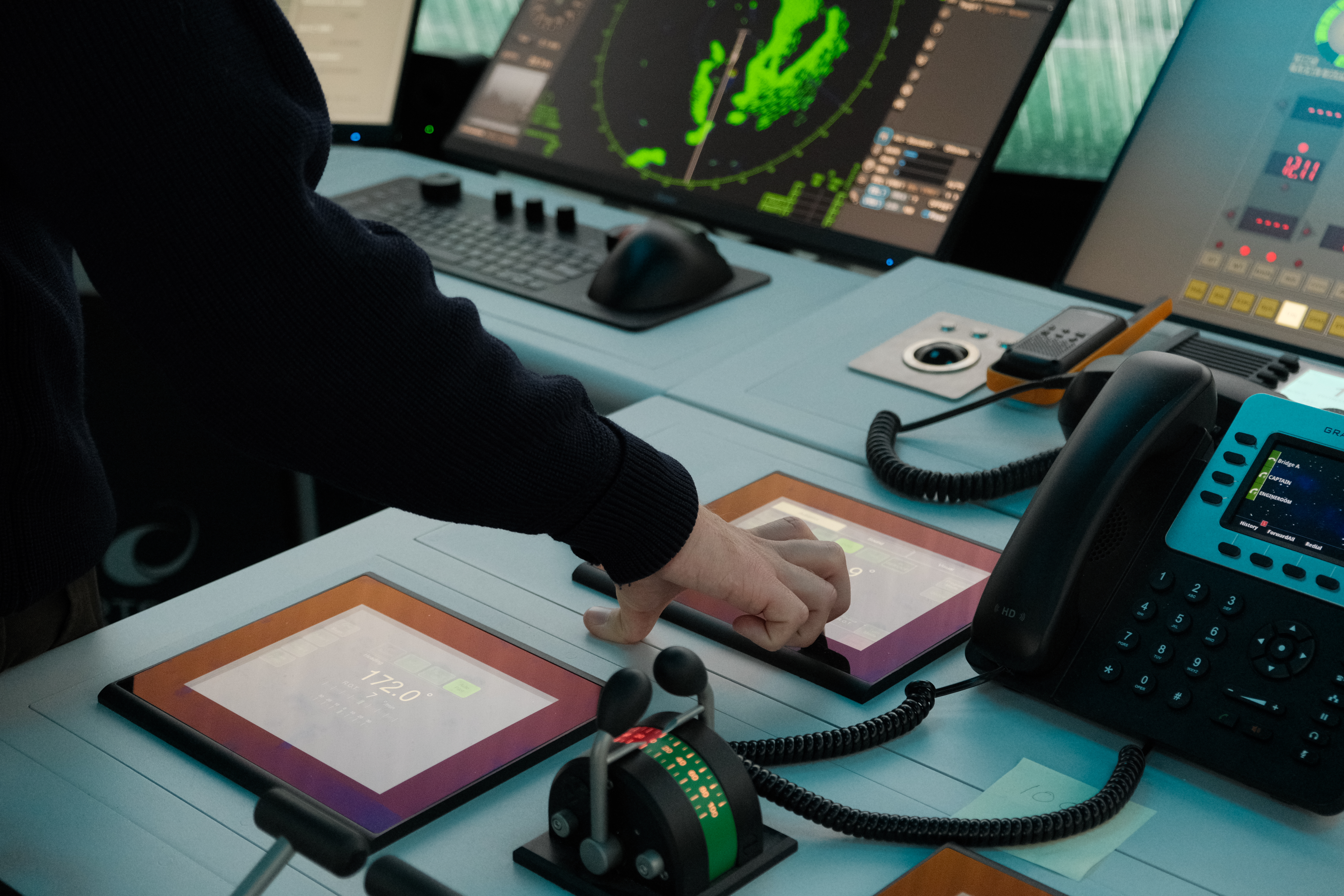
Within Pilot Training, SIMAC Training offers the standard courses listed below.
All courses are offered on request only.
You are welcome to contact SIMAC Training if you would like to discuss the possibility of a customized training programme tailored to your specific requirements within the pilotage sector.
Training for Marine Pilots
Pilotage Law for Danish Marine Pilots
Purpose and Course Content:
The purpose of the Pilotage Law for Danish Marine Pilots course is to provide marine pilots with an understanding of legal methodology and to review relevant areas of law applicable to their daily work. Participants also gain insight into the civil and criminal liabilities and sanctions related to a pilot’s duties and obligations.
Upon completion of the course, participants will have a solid understanding of current international and national laws, regulations, and other provisions relevant to pilotage operations and the responsibilities of marine pilots.
The course consists of classroom-based instruction covering relevant legal subjects for marine pilots, including both general and specialized areas of law. The teaching format combines lectures on theoretical topics with the review of practical case studies, supported by discussion and dialogue between instructors and participants.
The course covers the following topics:
The structure of legislation and public authorities
The Danish Pilotage Act and applicable executive orders
Pilotage fees and charges
Duties and obligations of marine pilots
Compulsory pilotage requirements
Pilot liability, including sanctions
Issuance of pilot certificates and pilotage exemption certificates
Marine inquiries and witness statements
Employment law matters relating to marine pilots
Selected areas of the Danish Merchant Shipping Act
Legal requirements for the performance of pilotage services
Entry Requirements/Target Group:
The course is intended for Danish marine pilots and pilot trainees.
Duration:
1 day
Notes:
The course was developed in cooperation with the Danish State Pilotage Service and meets the training requirements for the "Pilotage Law Course for Marine Pilots" as specified in Executive Order No. 1201 of 1 December 2006 on the issuance of pilot certificates and pilotage exemption certificates. The executive order is based on International Maritime Organization Resolution A.960(23), sections 5.5.8 and 6.3.
Shiphandling for Marine Pilots
Purpose and Course Content:
This course teaches participants ship handling and manoeuvring in a relevant pilotage area, with a focus on safe and efficient manoeuvring techniques under realistic operational conditions. Upon completion of the course, participants will have acquired the qualifications required to plan and execute harbour manoeuvres, assess hydrodynamic effects, apply appropriate manoeuvring strategies, and understand vessel response under varying weather, current, and loading conditions.
The course combines theoretical instruction with practical exercises, where key principles are reviewed and tested in practice using simulators and, where relevant, other suitable training environments.
The course covers the following topics:
Manoeuvring capabilities and strategies
Stopping distances and turning techniques
Use of thrusters
Rudders, propellers, and propulsion systems, including azimuth thrusters and POD systems
Harbour manoeuvring with different vessel types
Banking effect, squat effect, and ship-to-ship interaction
Navigation under varying weather conditions, including wind, current, and waves
Instrument navigation in restricted visibility and during night operations
Anchoring and special manoeuvres
Use of tugboats and escort towing
Under-keel clearance, pivot point, and hydrodynamics
Practical navigation exercises supporting the theoretical topics
Entry Requirements/Target Group:
The course is intended for Danish marine pilots and pilot trainees.
Duration:
Determined according to the course design, pilotage area, and training method.
Notes:
The course is conducted as a pilotage-specific ship handling course in accordance with current pilot training requirements. For certification in Category A pilotage areas, training must be conducted using manned models, while training for Categories A*, B, B*, and C may be conducted in a full mission simulator.
The course must be completed at least once every five years.
Bridge Team Management (ET) for Marine Pilots
Purpose and Course Content:
The course teaches participants effective cooperation, communication, and information exchange between the marine pilot, master, and bridge team under both normal and critical operational conditions. Upon completion of the course, participants will have acquired the qualifications necessary to conduct a safe Master–Pilot Information Exchange, establish shared situational awareness, manage human factors, and actively participate in bridge operations during both routine navigation and emergency situations.
The course is based on a dialogue-oriented teaching approach combining theoretical instruction, case studies, and simulator exercises, where briefing, communication, teamwork, and emergency procedures are practiced in realistic scenarios.
The course covers the following topics:
Master–Pilot Information Exchange
Pilot card and exchange of key operational information
Voyage planning, including emergency procedures
Information relating to mooring operations, tugboats, and local conditions
Communication with the master and bridge team
Safe and effective task allocation on the bridge
Shared situational awareness and briefing techniques
Human strengths and limitations
Linguistic, cultural, and psychological barriers
Fatigue, stress, and workload management
Case studies
Simulator training in normal and critical situations
Emergency and crisis management, including failure of steering systems, main engines, radar, gyrocompass, ECDIS, and other vital systems
Management of collisions, groundings, oil spills, search and rescue operations
Entry Requirements/Target Group:
The course is intended for Danish marine pilots and pilot trainees.
Duration:
Determined according to the course design and the scope of simulator training.
Notes:
The course fulfills the training requirements for Bridge Resource Management (BRM) and Emergency Training (ET) for marine pilots and must be completed at least once every five years.
The course is based on current Danish training requirements for marine pilots and the recommendations contained in International Maritime Organization Resolution A.960(23).
Basic Tug Handling – Level 1
Purpose and Course Content:
The course provides participants with knowledge of tug operations, the characteristics, capabilities, and limitations of tugboats, and safe communication between the marine pilot and tug master during operational manoeuvres. Upon completion of the course, participants will have acquired the qualifications necessary to use tugboats safely and effectively, understand key hydrodynamic principles related to towing operations, and manage both routine and critical situations involving tug assistance.
The course combines theoretical instruction, practical exercises, and operational scenarios, allowing participants to train with different types of tugboats and practice handling relevant emergency situations.
The course covers the following topics:
Hydrodynamic principles
The influence of the pivot point during towing operations
Hazardous situations during towing
Towlines and towing equipment
Direct and indirect towing, including transverse arrest
Escort towing
Use of different types of tugboats, including conventional tugs, Azimuth Stern Drive (ASD) tugs, Voith Schneider tugs, Rotor Tugs, and escort tugs
Emergency situations involving tugboats
Human factors, including communication and issuing orders to tugboats
Practical manoeuvring exercises using different types of tugboats
Emergency response and handling procedures
Participation in towing operations on board a tugboat
Entry Requirements/Target Group:
The course is intended for Danish marine pilots and pilot trainees.
Duration:
Determined according to the course design and practical training requirements.
Notes:
The course is conducted in accordance with the current training requirements for Tug Handling Courses for Marine Pilots and must be completed at least once every five years.
Completion of this course is considered equivalent to Ship-to-Ship Operations, Part I.